Recovery housing
Healing Touch Center of Cincinnati Recovery Center is a facility designed to help individuals overcome addiction, substance abuse, mental health challenges, or other behavioral health conditions. Its main purpose is to support people in achieving and maintaining long-term recovery in a safe, structured, and supportive environment.
Safe Detox & Medical Stabilization
For many people struggling with drug or alcohol addiction, the first step is detoxification. Recovery centers:
- Provide medical supervision during withdrawal
- Monitor vital signs and manage symptoms safely
- Reduce risks associated with quitting substances
This step ensures individuals begin recovery as safely and comfortably as possible.

Therapy & Counseling
Healing Touch Center of Cincinnati will focus heavily on emotional and psychological healing. Services often include:
- Individual therapy
- Group therapy
- Family counseling
- Trauma-informed care
- Cognitive behavioral therapy (CBT)
These therapies help individuals understand the root causes of addiction and develop healthier coping strategies.
Skill Building & Relapse Prevention
A key purpose of Healing Touch Center of Cincinnati Recovery Center will prepare individuals for life after treatment by teaching:
- Stress management techniques
- Healthy communication skills
- Daily life and job-readiness skills
- Relapse prevention planning
Recovery is not just about stopping substance use — it's about building a stable, healthy lifestyle.


Ongoing Support & Community
Long-term recovery is strengthened through connection. Healing Touch Center of Cincinnati Recovery Center provide:
- Peer support programs
- Alumni groups
- Sober living housing
- Continued outpatient care
Community support reduces isolation and helps individuals stay accountable.
The Overall Purpose
The core purpose of Healing Touch Center of Cincinnati Recovery Center is to:
- Help individuals stop harmful behaviors
- Address the underlying emotional and psychological causes
- Teach tools for long-term stability
- Provide structure, safety, and support
- Help individuals rebuild relationships and purpose
Healing Touch Center of Cincinnati Recovery Center aim not just for sobriety — but for lasting transformation and improved quality of life.
iBac Sobriety Tool
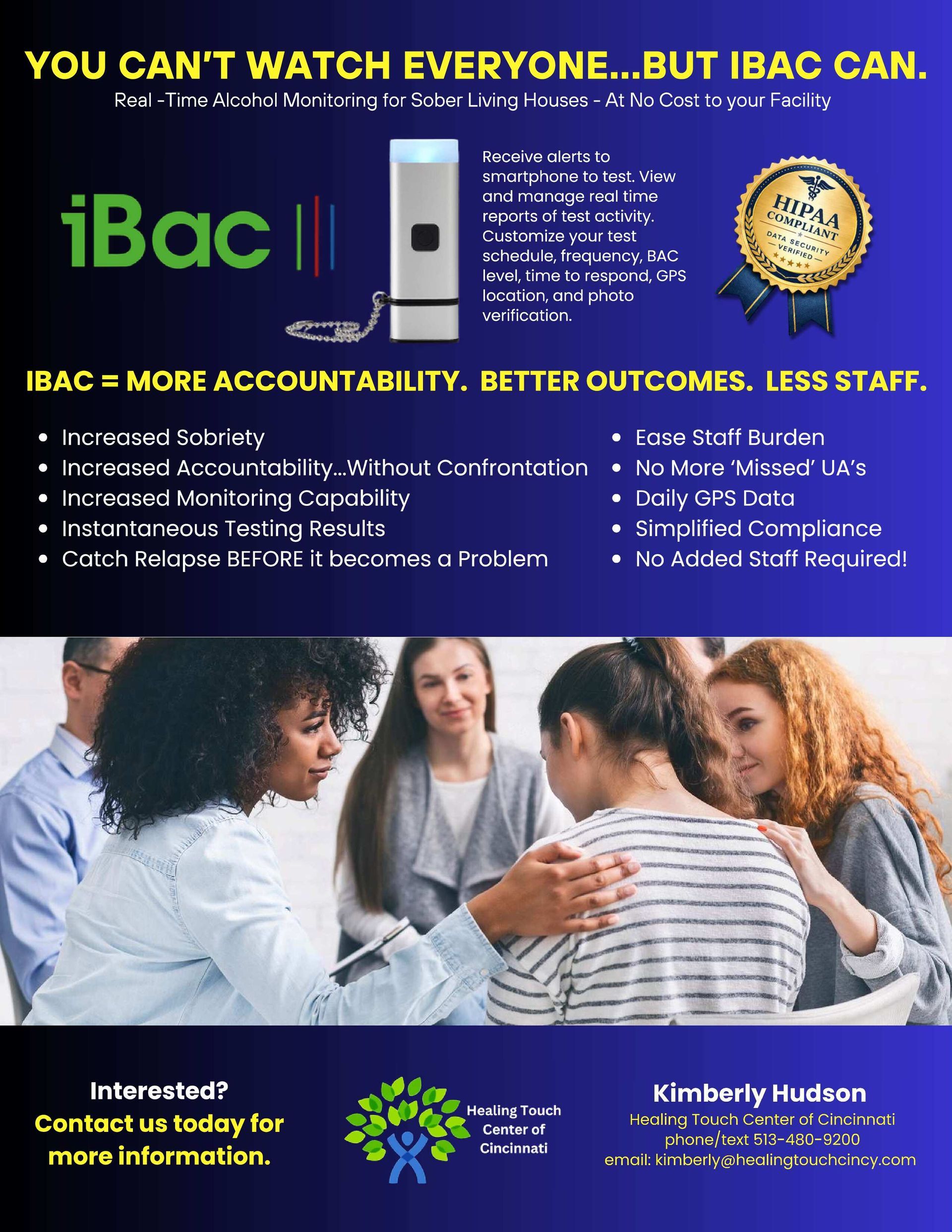
The iBac sobriety tool is a Bluetooth-connected professional breathalyzer system designed for alcohol monitoring, compliance, and sobriety verification. It pairs with a smartphone app to measure breath alcohol concentration (BrAC) and can send results, GPS location, timestamps, and photo verification data to authorized users or organizations.
Key features include:
- Fuel-cell breathalyzer technology for professional-grade accuracy
- Smartphone connectivity on Android and iOS
- Random or scheduled testing
- GPS and facial/photo verification
- Cloud-based reporting and monitoring
- Court, probation, treatment, and family-law use cases
Typical uses:
- DUI / probation compliance
- Child custody and family law monitoring
- Workplace sobriety testing
- Rehab and outpatient treatment programs
- Personal accountability and sobriety tracking
For more information, contact the Healing Touch Center of Cincinnati at (513) 480-9200
Stable Housing During Your Recovery Journey
Healing Touch operates Recovery Housing Programs that provide safe, sober living environments for individuals working on substance use recovery.
You have made the decision to pursue recovery, and finding a stable place to live is one of the most important steps in making that change last. Healing Touch offers recovery housing that gives you a drug-free and alcohol-free environment where you can focus on sobriety without the distractions or triggers that often exist in other living situations. These homes provide structure, accountability, and peer support as you work through the early stages of recovery.
Our recovery housing includes private or shared bedrooms, common living areas, and access to support staff who help you stay connected to treatment, maintain household responsibilities, and build healthy routines. You live alongside others who are also in recovery, which creates a sense of community and shared purpose. House rules include regular drug testing, participation in recovery meetings, and adherence to curfews and expectations that support sobriety.
If you are leaving treatment and need a safe place to continue your recovery, contact Healing Touch to learn about program requirements and current availability.
How Recovery Housing Supports Long-Term Sobriety
Your day in a recovery home includes attending 12-step meetings or other support groups, maintaining employment or attending job training, completing household chores, and participating in house meetings. Staff check in regularly to make sure you are following your recovery plan and staying engaged with outpatient therapy or counseling. Random drug and alcohol screenings are conducted to maintain accountability and protect the safety of all residents.
After living in a recovery home for several weeks or months, many residents notice they feel more confident in their ability to stay sober and handle stress without using substances. You develop daily habits that support your recovery, build relationships with others who understand your challenges, and gain skills that help you transition to independent living when you are ready. The structured environment reduces the chaos that often accompanies early recovery and gives you time to rebuild trust with yourself and others.
Residents are expected to contribute to the household by preparing meals, cleaning common areas, and supporting housemates in their recovery efforts. Staff provide guidance and resources, but recovery housing is not a treatment facility and does not offer clinical therapy or medical detox. You must be actively engaged in outpatient treatment or mutual support groups to remain in the program.
Starting recovery housing can bring up a lot of questions
People often want to know what the rules are, how long they can stay, and what happens if they relapse. These are the questions we hear most from individuals considering recovery housing.
What are the main rules in recovery housing?
You must remain completely sober, attend recovery meetings, submit to random drug testing, maintain employment or education, and contribute to household responsibilities. Curfews and visitor policies are also enforced to maintain a stable environment.
How long can I stay in a recovery home?
Length of stay varies based on your progress and personal goals. Some residents stay for a few months, while others remain for a year or longer as they work toward independent living and sustained sobriety.
What happens if I relapse while living in the home?
Relapse typically results in discharge from the program, though each situation is reviewed individually. If you relapse, staff may refer you back to treatment or help you find another level of care that better meets your current needs.
Do I need to have completed treatment before moving in?
Most recovery homes require you to have completed a detox or inpatient treatment program before admission. You must be physically stable and ready to focus on maintaining sobriety in a community setting.
What kind of support is available from staff?
Staff provide accountability, resources for employment and benefits, connections to outpatient treatment, and crisis support if you are struggling. They do not provide counseling or therapy, but they help you stay on track with your recovery plan.
Recovery housing can provide the stability and community support you need to build a life free from substances. Healing Touch is here to answer your questions, review program expectations, and help you take the next step. Contact us to get started.